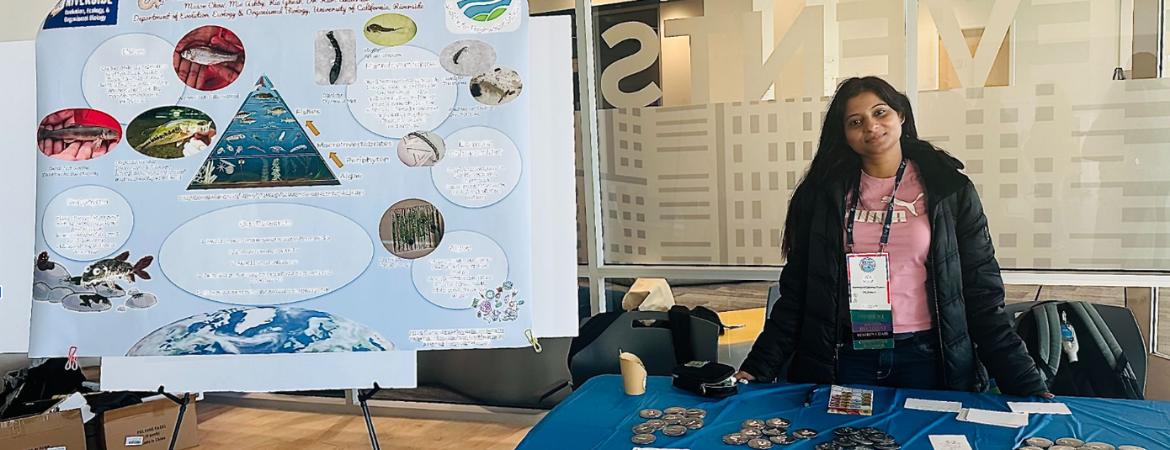
Standing before fellow freshwater scientists at the Society for Freshwater Science Annual Meeting, UC Riverside Evolution Ecology & Organismal Biology (EEOB) doctoral student, Ria Ghosh, presented research examining the health of one of Southern California's most important—and heavily altered—river systems.
The Society for Freshwater Science Annual Meeting brings together freshwater scientists, students, agency researchers, practitioners
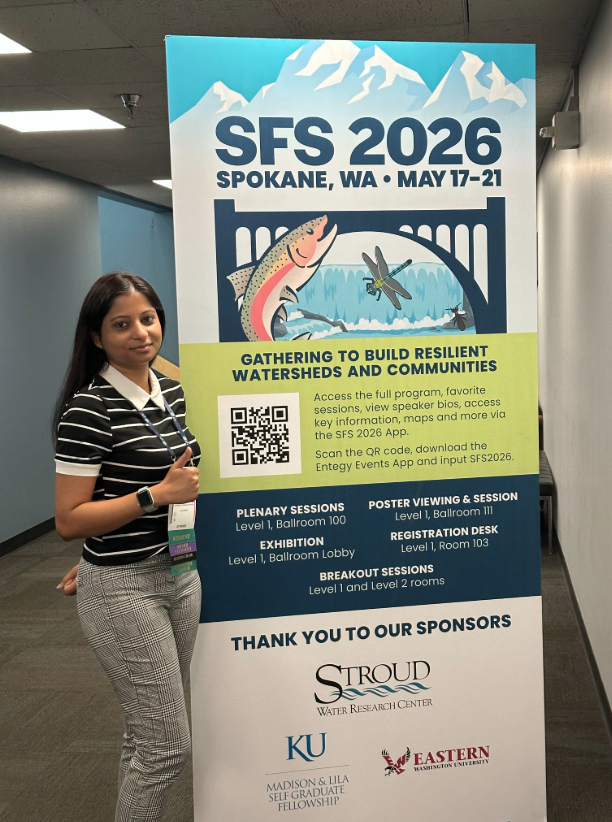
and conservation professionals from across the United States and around the world. During the May 17–21 conference in Spokane, Washington, Ghosh presented findings from her research on community dynamics in the urban Santa Ana River using a bio-indicator, size spectra, as a member of Professor Kurt Anderson's lab.
Her oral presentation, Assessing Spatial and Temporal Variation in Size Spectra of Benthic Macroinvertebrates in the Urban Santa Ana River, examined how the body-size structure of aquatic insect communities changes across locations and seasons.
The Santa Ana River is the largest watershed in Southern California. In the section Ghosh studies, much of the river's flow comes from treated wastewater, creating an urban ecosystem shaped by altered hydrology, water chemistry and human activity.
By studying aquatic insects, algae and fish communities, Ghosh is working to understand whether the river contains sufficient resources across the ecosystems.
"We're trying to understand how much is available, in which places, and at what time," Ghosh said. "That can help us understand whether there are sufficient resources for the organisms living in the river and if the ecosystem services can be maintained or not.
Her work has direct implications for conservation efforts involving native fish species, including the federally threatened Santa Ana sucker and the arroyo chub. Identifying when and where food and habitat resources become limited can help researchers and environmental managers better understand ecosystem stress and inform efforts to protect the river's biological communities.
Ghosh's research uses size spectra—the distribution of body sizes within an ecological community—as an indicator of ecosystem health. The approach can provide insight into ecosystem structure and functions within a single analytical framework.
Freshwater research can require repeated field sampling, species identification, water chemistry analysis, molecular approaches and extensive technical resources. Ghosh hopes her work can help advance size spectra as a more cost effective and sustainable tool for assessing environmental conditions in freshwater systems.
Ghosh was also selected to receive two awards from the Society for Freshwater Science: General Endowment Award and an award from the American Microscopical Society for working with diatoms. For Ghosh, the recognition was especially meaningful because it gave her the opportunity to present her research alongside students and researchers from institutions across the country and around the world.
For Ghosh, presenting at the conference was about more than sharing results. It was also an opportunity to exchange ideas with researchers studying similar questions, receive feedback and build relationships that may support future collaborations.
"Science needs to be communicated," she said. "You cannot just do the science and keep it in the lab." She noted that conversations at scientific conferences can help researchers see their work from new perspectives. "Someone may offer a perspective that can be added to the research and make it more useful for conservation and management," she said.
Beyond her presentation, Ghosh contributed to the broader conference community by chairing a session on eutrophication and harmful algal blooms, volunteering with the International Student Mixer and participating in the Science Communication Fair.
She also took part in meetings and activities focused on urban freshwater research, interdisciplinary collaboration and community
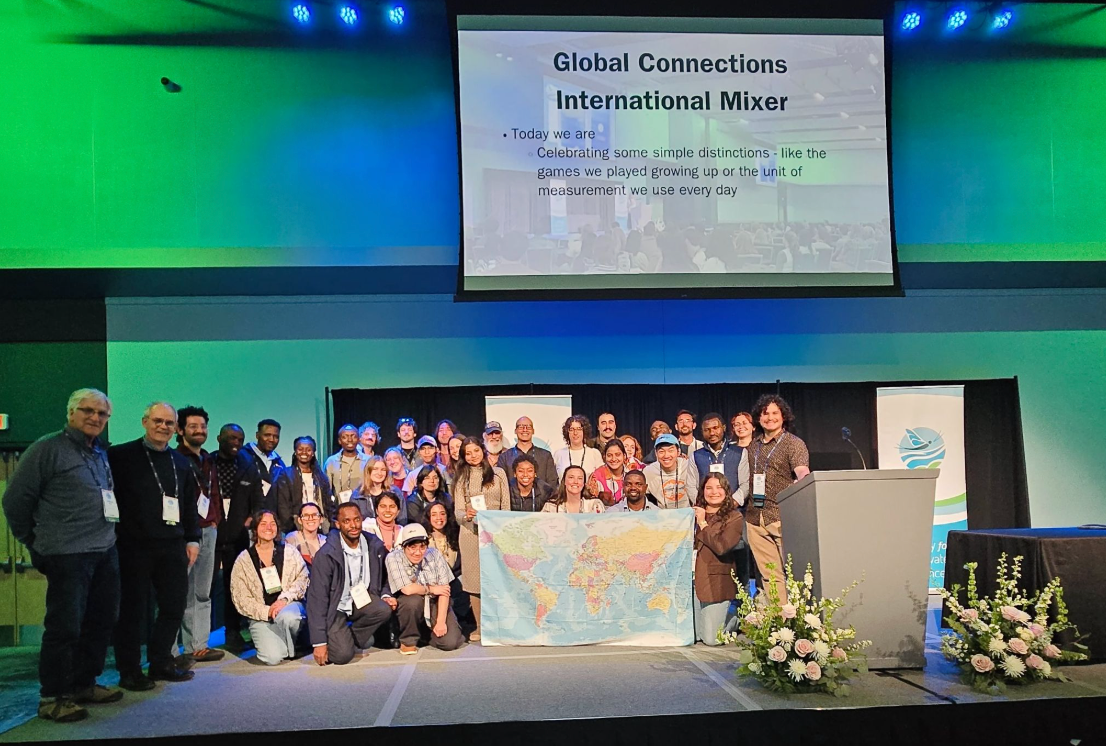
building. Together, those experiences allowed her to contribute not only as a researcher, but also as an emerging leader within the freshwater science community.
After completing her Ph.D., Ghosh hopes to pursue a postdoctoral position and eventually build a career in academia.
Her experience in Spokane reflects how graduate education extends beyond laboratory and fieldwork. Through research, conference presentations, professional service and scientific collaboration, CNAS graduate students are developing the knowledge, professional networks and leadership skills needed to advance science and address complex environmental challenges.
Let us help you with your search